


 Français
  Deutsch
  Italiano
  Español
Ibiza and Formentera are two beautiful Mediterranean islands brimming with fascinating nature, history, and culture. Both belong to Spain’s Balearic Islands, and each one has unique traits that make it special. Below you’ll find 20 amazing facts about Ibiza and Formentera. From pine trees and lizards to ancient pirates and magical sunsets, these fun facts will showcase a friendly and enchanting side of the islands.
1. Ibiza and Formentera: The “Pine Islands” Nickname
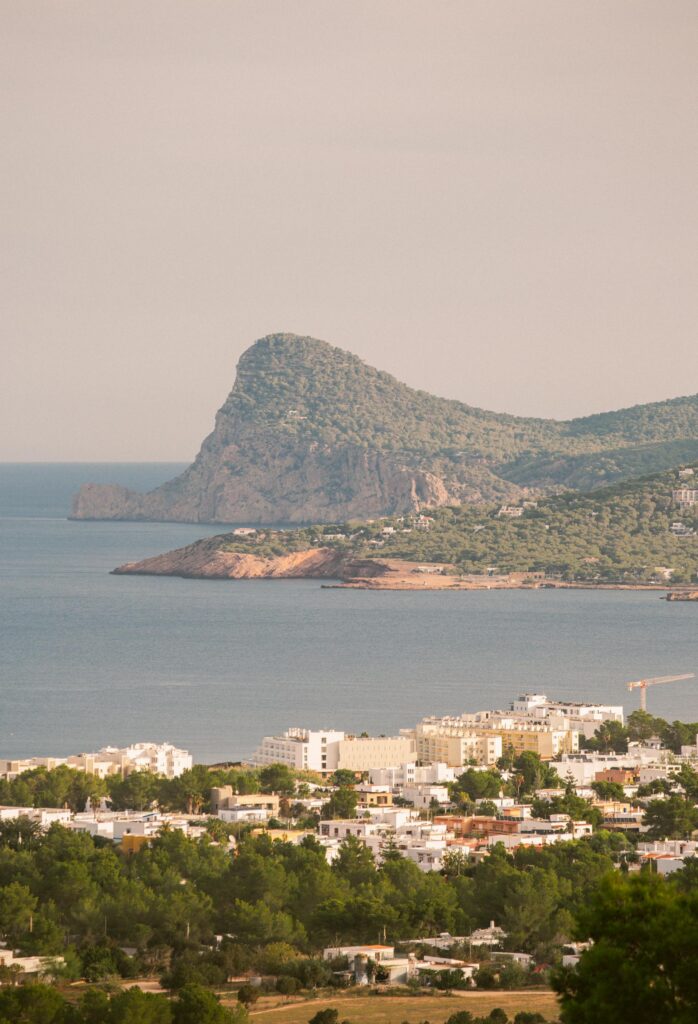
The ancient Greeks nicknamed Ibiza and Formentera the Pityusic Islands, which means “pine-covered islands.” They chose this nickname because both islands are covered with pine trees. You can still see green pine forests all over the islands today. No wonder people call them the “Pine Islands”!
2. Ibiza Is a UNESCO World Heritage Site for Nature and Culture
UNESCO (a global heritage organization) declared parts of Ibiza as World Heritage Sites to protect its nature and culture. This World Heritage designation, called “Ibiza, Biodiversity and Culture,” honors the island’s historic sites and natural treasures. It covers several locations on Ibiza. These include the old fortified town of Dalt Vila, an ancient Phoenician settlement at Sa Caleta, a prehistoric cemetery at Puig des Molins, and even the underwater seagrass meadows around the island. All these special places remain protected so that everyone can appreciate them as part of our global heritage.
3. Underwater Seagrass Meadows Are Over 100,000 Years Old
Beneath the blue waters between Ibiza and Formentera lie huge fields of Posidonia oceanica, also known as Neptune grass. This seagrass is incredibly special. Scientists discovered one meadow that stretches eight kilometers and is over 100,000 years old! In fact, scientists consider it one of the largest and oldest living organisms on Earth. These ancient seagrass beds are protected under Ibiza’s World Heritage listing, and they help keep the sea around the islands crystal clear and full of life.
4. Friendly Lizards Live Only Here
Ibiza and Formentera even have their own species of lizard, the Ibiza Wall Lizard (Podarcis pityusensis). You can spot these little reptiles everywhere, basking in the sun or scurrying near rocks and walls. They come in colors ranging from bright turquoise-green to brown. This lizard exists nowhere else in the world – it’s endemic to the “Pine Islands.” The lizards are harmless and often curious. On Formentera, they might even climb onto you if you offer a crumb of food! Keep an eye out for these tiny mascots of the islands.
5. Ibiza Is Home to the World’s Largest Nightclub
One of Ibiza’s big claims to fame is its legendary nightlife. The island boasts Privilege Ibiza, the biggest club on the planet, capable of hosting around 10,000 people at once! This giant dance club has a main room as large as an airplane hangar. It even features a swimming pool inside! In 1987, music stars Freddie Mercury and Montserrat Caballé filmed a video here. (At that time, the club went by the name Ku.) Ibiza’s huge clubs are famous worldwide (and they’re really meant for adults). Still, it’s amazing that the world’s largest party venue sits on such a small island.
6. Ibiza’s Boat Parties and Sunsets Are Legendary
Ibiza is known worldwide as a party island. One unique way people celebrate here is at sea on an boat party Ibiza. Guests hop on a boat with DJs and music, creating a floating celebration on the Mediterranean. Organizers often time these parties to catch Ibiza’s breathtaking sunset – imagine dancing as the sun sinks into the sea! In fact, a sunset boat party Ibiza lets everyone enjoy live music and dancing while the sky turns brilliant orange and pink. It’s also a famous Ibiza tradition to applaud the sunset.
Formentera’s vibe is much quieter. People gather at places like the Cap de Barbaria lighthouse to watch the sunset in peace. Some say this peaceful sunset is just as magical as any party.
7. Ibiza Is Smaller Than a Major City (But Feels Bigger)
Ibiza packs a lot of wonders into a small area. The island covers about 571 square kilometers (220 square miles). That’s only roughly one-sixth the size of nearby Mallorca. For a fun comparison, Ibiza is about ten times the size of Manhattan (the famous island in New York City)! Many people are surprised when they see how small Ibiza looks on a map. Yet with its rolling hills, numerous beaches, and villages, the island can feel much larger when you explore it. Formentera is even smaller, which makes both islands very easy to explore.
8. Formentera Has No Airport – Just a Quick Ferry Ride Away
Unlike most tourist destinations, Formentera has no airport at all. This tiny island covers only about 83 square kilometers (32 sq mi). You can only reach it by boat. Luckily, Ibiza is very close by. The distance between Ibiza and Formentera is only about 19 kilometers (12 miles) across the sea. Regular ferries take visitors from Ibiza to Formentera in around 30 minutes. Not having an airport helps Formentera stay peaceful and less crowded. The island is about 20 km long and mostly flat. Its highest point is La Mola (around 193 meters high), which offers superb cliff views. If you visit, you’ll likely arrive by ferry at the port of La Savina. After that, you can explore this calm little paradise by bicycle, scooter, or car.
9. Harvesting Salt Here for Millennia
Both Ibiza and Formentera have a very “salty” heritage. Ibiza’s southern salt flats, called Ses Salines, have been producing salt for over 2,700 years – since the time of the Phoenicians! In the past, salt was extremely valuable because people used it to preserve food. These salt pans were like white gold back then. If you fly into Ibiza, you might see the gleaming salt ponds from above. The salt flats are now part of a natural park, and they still produce piles of salt every summer. Formentera also had a salt industry. The island’s main salt lagoon (Estany Pudent) provided salt until 1985, when production stopped because demand dropped. Today, you can visit the old salt marshes and see birds like herons and flamingos there. You can even buy Ibiza’s sea salt as a souvenir.
10. Ancient Phoenicians Founded Ibiza in 654 BC
Humans have lived on Ibiza and Formentera for thousands of years, but Ibiza in particular has a very old urban history. Ancient Phoenician settlers founded the city of Ibiza in 654 BC. They named it Ibossim and chose it as a trading port, dedicating it to Bes – an Egyptian god of music and dance (a fitting patron for Ibiza!). Later, the Carthaginians took control of Ibiza, followed by the Romans, Moors, and other groups. Ibiza’s long history includes a mix of many cultures.
Interestingly, there’s no evidence the Phoenicians ever settled on tiny Formentera, even though it’s so close. They seemed to prefer Ibiza, possibly because of its good harbors and resources.
If you visit Ibiza’s museums or archaeological sites, you can see artifacts from these ancient times. One famous site is the Necropolis of Puig des Molins, an ancient burial ground. Another is Sa Caleta, the ruins of the first Phoenician village on Ibiza. Both are protected as World Heritage sites today.
11. Ibiza Earned the Nickname “White Island” – and It’s Super Sunny
Ibiza’s traditional houses and churches are often painted bright white (using lime). Combined with the island’s intense sunlight, this look earned Ibiza the nickname “Isla Blanca” (White Island). Some locals say those white buildings helped keep interiors cool and even repelled insects back in the day.
Ibiza is also bright in another way: it enjoys around 300 sunny days a year! On average, there are only about 40 days of rainfall annually. In summer, temperatures can reach the mid-30s °C (into the 90s °F), while winters remain mild. This great weather means Ibiza and Formentera have long beach seasons and plenty of outdoor fun year-round. Don’t forget your sunscreen if you visit!
12. Ibiza Has the Only River in the Balearic Islands
You wouldn’t expect a big river on a small island, and indeed Ibiza has the only one in the Balearics. The Santa Eulària River on Ibiza is the only true river in all the Balearic Islands! It’s so unique that locals even named a town after it: Santa Eulària des Riu (which means Saint Eulalia of the River). Long ago, this river was an important water source for farms and even powered flour mills. Today, however, the river is mostly dry. It flows only seasonally and sometimes shrinks into just a stream or a series of ponds. There’s an interpretation center at Can Planetes in Santa Eulària where you can learn about the river’s history. It’s pretty cool that among all the islands of Mallorca, Menorca, Ibiza, and Formentera, only Ibiza has a true river. It may be a small one, but it’s the only river around!
13. Locals Speak a Unique Language Called Eivissenc
Spanish (Castilian) may be the official language of Spain, but Ibiza and Formentera have their own local language heritage. The traditional language here is Catalan, spoken in a special island dialect known as Eivissenc (in Ibiza) and Formenterenc (in Formentera). For example, Ibiza’s name in Catalan is Eivissa, while Formentera’s name is almost the same as in Spanish (Formentera). You might see signs in both languages, and you’ll hear locals use words and an accent that sound a bit different from mainland Catalan. It’s a musical, friendly-sounding way of speaking.
But don’t worry – most people on Ibiza and Formentera are bilingual or trilingual, and many also speak Spanish and English. The islands have rich folklore too, including traditional folk dances called Ball Pagès and festivals where people wear old-time costumes. The local language and customs are an important part of the islands’ identity, even as they welcome visitors from around the world.
14. Pirates Once Menaced the Islands (And Left Their Mark!)
Centuries ago, Ibiza and Formentera had to deal with real pirates – not the fun Jack Sparrow kind, but Ottoman and Barbary corsairs who roamed the Mediterranean. In the 1500s, Ibiza built a network of coastal watchtowers to spot pirate raids and defend the island. Many of these stone towers still stand along the shores (you can hike to some of them). They had cannons, and lookouts used smoke signals by day or fire by night to warn of incoming pirate ships. For local people, these towers could also serve as safe refuges during an attack.
Formentera, being smaller and unfortified, suffered even more from piracy. In fact, nearly everyone abandoned Formentera for almost 200 years because of pirate raids. After the Middle Ages, very few people lived on Formentera until the late 17th century, when settlers finally returned to the island.
Today, the pirate era is long gone, but it left the islands with some exciting legends and historic sites. You might even hear stories about the cave of Sa Cova des Fum on Formentera, where a Viking prince (Sigurd of Norway) supposedly smoked out hiding pirates in 1108 AD! Whether myth or truth, these tales add a sense of adventure to the islands’ history.
15. The 1960s Brought Hippies, Music, and Famous Rock Stars
Ibiza and Formentera aren’t just about dance clubs – in the 1960s and ’70s they were havens for hippies and artists looking for a peaceful life. The “hippie movement” took hold on these islands as young people from around the world came to enjoy the natural beauty and free-spirited atmosphere. They started open-air craft markets (like the still-popular Las Dalias market on Ibiza) and held drum circle gatherings at sunset. Formentera, in particular, became a tranquil hippie hideout during that era.
Even some very famous musicians found inspiration on the islands. Legends like Bob Dylan and members of Pink Floyd spent extended time on Formentera in the late ’60s. Bob Dylan allegedly lived in an old windmill by La Mola for a while, seeking solitude. Pink Floyd wrote parts of a film soundtrack (More) on the island. The vibe of “Make Love, Not War” attracted many other artists and writers to Ibiza and Formentera as well.
To this day, you can still feel this hippie heritage. There are colorful craft markets, yoga retreats, and a generally laid-back culture, especially in certain beach areas. Every Sunday at Ibiza’s Benirrás Beach, for example, people gather to play hand drums together as the sun sets — a tradition that started in the hippie era. It’s a reminder that Ibiza and Formentera have long been places of creative freedom and community.
16. Formentera Boasts Some of the World’s Best Beaches
Despite its small size, Formentera is world-famous for its picture-perfect beaches. The sand is powdery white. The sea is unbelievably clear and turquoise, thanks in part to the posidonia seagrass that filters the water.
Ses Illetes beach on Formentera often ranks among the top beaches on the planet. It’s like a tropical paradise, yet you’re in the Mediterranean! In fact, many travel guides call Ses Illetes one of the most beautiful beaches in the world. This beach sits in a protected park area, with dunes and shallow waters that are great for kids to splash in. You can even wade or swim over to the tiny islet of Espalmador when the tide is low.
Ibiza, too, has gorgeous beaches, from the long Playa d’en Bossa to secluded coves like Cala Saladeta. However, Formentera’s shores have a special untouched charm (no big buildings in sight). Many visitors take a day trip from Ibiza to enjoy Formentera’s beaches. Others stay longer to relax on what feels like a Caribbean island dropped into the Mediterranean. Don’t forget to bring a mask and snorkel! The waters around both islands are teeming with fish.
17. Pink Flamingos Visit Ibiza’s Salt Ponds
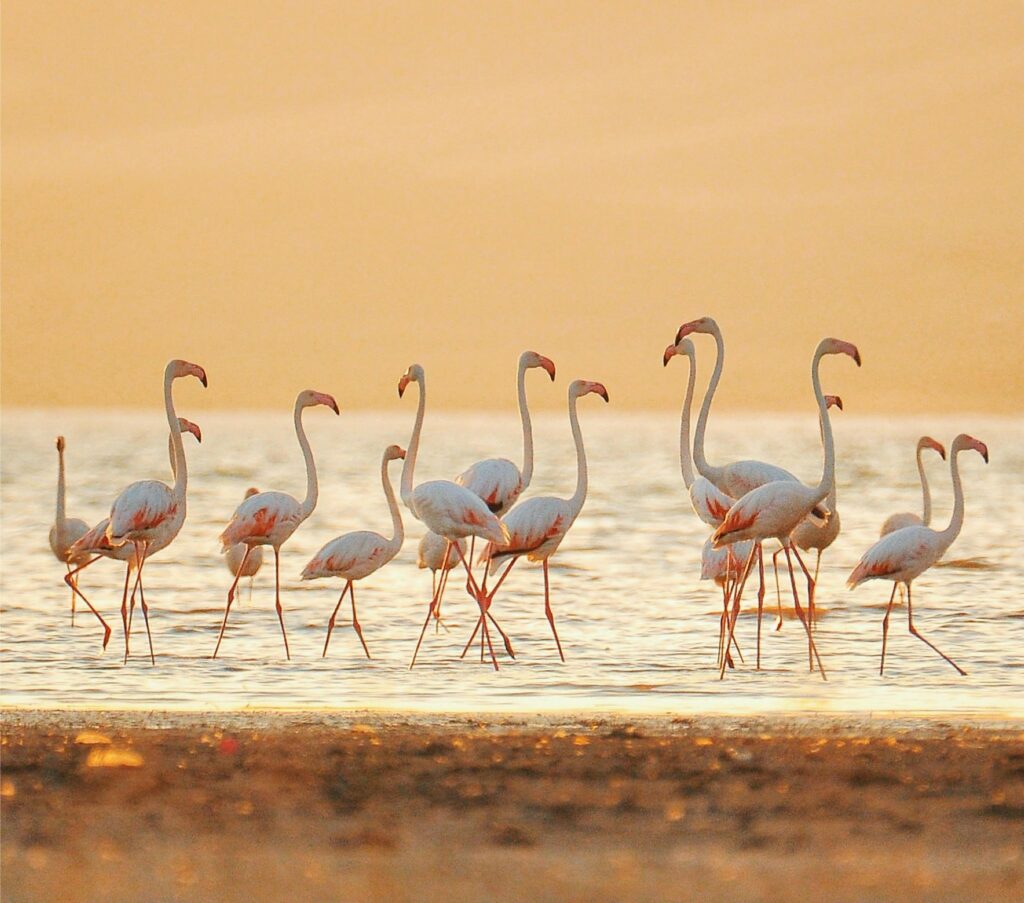
If you love animals, here’s a treat: parts of Ibiza and Formentera serve as a seasonal home for flamingos! The Parc Natural de Ses Salines (which spans southern Ibiza, the sea in between, and northern Formentera) includes wetlands and salt ponds that attract many water birds. Researchers have recorded over a thousand flamingos in Ibiza’s salt flats in recent years – the highest number since counts began in 1988.
These tall, pink-feathered birds aren’t permanent residents (they migrate), but many stop by in spring and autumn to feed on brine shrimp and algae in the salty lagoons. Flamingos get their pink color from the tiny crustaceans they eat, and the salt pools provide plenty of those snacks. If you visit Ibiza in the off-season, you might spot flocks of flamingos wading in the shallow salt lakes. In late summer and fall, the water in these ponds evaporates and even turns reddish. That’s prime time for flamingo sightings! It’s an amazing sight – a flash of tropical pink in Ibiza. Birdwatchers also love seeing other water birds like herons, stilts, and cormorants in these protected parks. So Ibiza and Formentera aren’t just about beaches. They’re also a mini-paradise for birdlife.
18. Es Vedrà – The Mysterious Magnetic Island
Just off Ibiza’s southwest coast rises a stunning rocky island called Es Vedrà. This uninhabited limestone islet (about 400 m tall) is the source of many myths and legends. One popular tale claims Es Vedrà is the third most magnetic spot on Earth (after the North Pole and the Bermuda Triangle), meaning compasses go crazy around it. While that magnetic lore isn’t scientifically true (it’s more legend than fact), it shows how magical the place feels.
According to Greek mythology, Es Vedrà was home to the Sirens – the sea nymphs from Homer’s Odyssey who lured sailors with enchanting songs. Locals also associate the island with Tanit, a Carthaginian goddess, and some fishermen have even spun UFO stories about strange lights near the rock. If that’s not enough, Es Vedrà has made it into pop culture as well: it appeared as the “mystical island” of Bali Hai in the famous 1958 movie South Pacific. (The filmmakers used Es Vedrà’s majestic look as the backdrop for the imaginary island in that musical.)
You can view Es Vedrà easily from Ibiza’s shore – the sunsets behind it are epic. You can also take a boat trip around it. Many visitors describe feeling a special energy when they see this dramatic cone-shaped island up close. True or not, the legends of Es Vedrà add an extra sense of mystery and wonder to Ibiza’s landscape.
19. Formentera’s Lighthouse Inspired Jules Verne
Here’s a literary fun fact: the famous French author Jules Verne (known for 20,000 Leagues Under the Sea and Around the World in 80 Days) wrote a science-fiction novel in 1877 called Off on a Comet. In that story, he chose Formentera as a setting – describing the island as if it were “the end of the world.” Formentera’s remote feel and its La Mola lighthouse clearly sparked his imagination. Interestingly, Jules Verne never actually visited Formentera himself; perhaps he heard stories of its solitude and dramatic scenery and let his mind do the rest.
Today, at La Mola (the high eastern plateau of Formentera), you can find a plaque honoring Jules Verne near the lighthouse. The monument thanks him for spotlighting the island in his tale. If you stand by La Mola’s lighthouse, with the wind and waves below, you can easily see why it would inspire a writer’s imagination. It truly feels like a lighthouse at the edge of the world. This special connection is a point of pride for Formentera – blending real geography with literary legend.
20. No Venomous Snakes Live on Ibiza or Formentera
Believe it or not, these islands historically had no native poisonous creatures at all – no venomous snakes, scorpions, or deadly spiders. To ancient people, this was astonishing. The Carthaginians (and Phoenicians) who settled Ibiza saw the absence of snakes as a sign that the gods had blessed the island. They even associated it with the protection of their god Bes (whom Ibiza is named after) – Bes was a deity who, among other things, people believed could ward off snakes and evil. Thus, some legends called Ibiza the “Island of the Gods.” Formentera, likewise, had no venomous critters. This made the islands very safe for barefoot walking!
It’s only in recent times (the last 20 years or so) that a few snakes have accidentally made their way to Ibiza, likely by hitchhiking in imported plants. This has caused some concern for local wildlife. But overall, you won’t find the kinds of dangerous reptiles on Ibiza or Formentera that you might see in other Mediterranean areas. Old-time locals always felt their home was a natural paradise, free from such threats – one more element adding to Ibiza’s mystical aura.
Conclusion
Ibiza and Formentera may be small islands, but they are big in surprises. From ancient history to unique ecology and rich culture, these sister islands offer so much to discover.
Whether pirate towers intrigue you or pink flamingos dazzle you, there’s something in these facts to make you smile and say “wow.” Of course, the islands are also famous for fun. From Ibiza’s vibrant boat parties to Formentera’s peaceful beaches, there’s something for everyone.
Next time you think of Ibiza and Formentera, remember they’re not just party spots on a map – they’re places of natural wonder and fascinating stories. These amazing facts prove that Ibiza and Formentera truly are special treasures of the Mediterranean!