

 Français
  Deutsch
  Italiano
  Español
Ibiza and Formentera, two gems of Spain’s Balearic Islands, captivate travelers with their striking visual beauty. Both islands have distinct characters: Ibiza is often vibrant and colorful, while nearby Formentera feels more soft and sun-bleached. These contrasting atmospheres provide endless inspiration through vivid colors, unique Mediterranean light, and rich textures. It’s no wonder artists, photographers, and dreamers flock here – the scenery sparks creativity at every turn. Below, we explore the colors, light, and textures that make Ibiza and Formentera a visual paradise.
Colors of the Islands
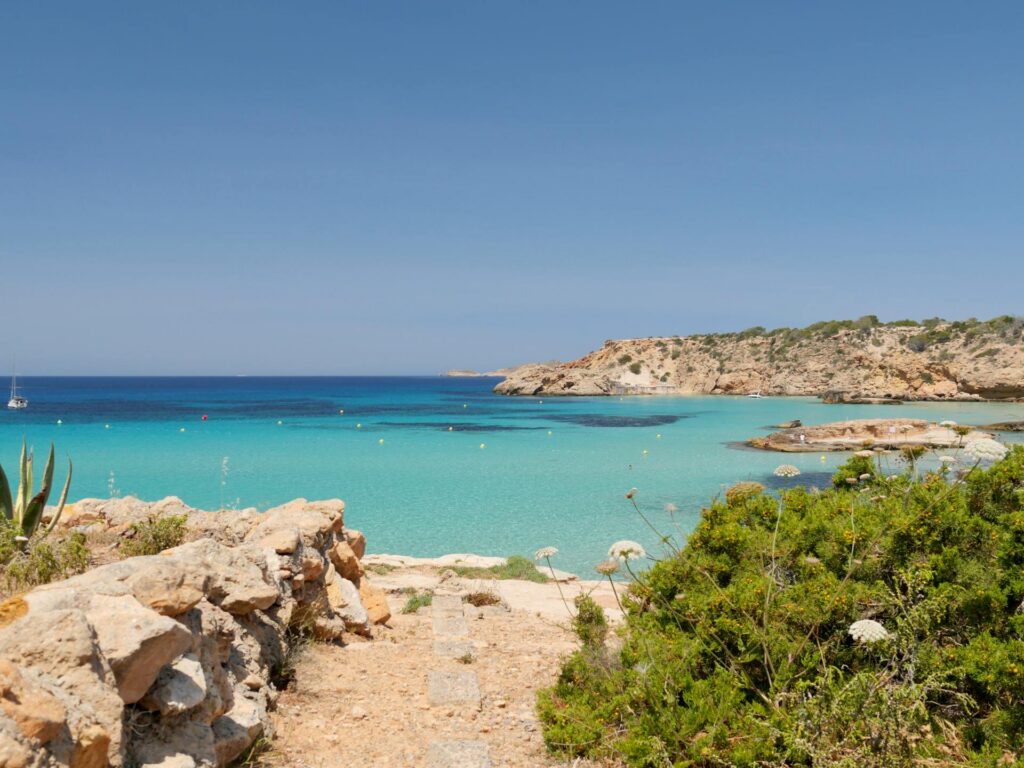
Turquoise waters and pale sands create postcard-perfect colors on a Formentera beach.
One of the first things you notice is the dazzling palette of colors across land and sea. The Mediterranean waters around Formentera and Ibiza shimmer in shades of turquoise and deep blue that look almost unreal. In fact, Ses Illetes beach on Formentera – often ranked among the world’s best – boasts turquoise water and fine white sand rivaling the Caribbean. This magical blue clarity is no accident: the waters are kept crystal-clear by Posidonia oceanica seagrass meadows, a UNESCO-protected underwater ecosystem between the islands. For many visitors, even Ibiza’s lively flora and architecture are upstaged by the “magical and almost unreal blue” of the surrounding sea – a color that leaves a lasting impression.
On land, Ibiza and Formentera present a vibrant yet harmonious spectrum. Ibiza is nicknamed the “White Island” for its traditional whitewashed houses and churches, which gleam under the sun. These bright white walls are often adorned with bursts of bougainvillea, hibiscus, and other flowers, painting villages in fuchsia, purple, and gold.
The local flora fills gardens and clings to clifftops with radiant color, turning the landscape into “one huge open-air canvas of blooms”.
Spring almond blossoms add pastel pinks and whites to Ibiza’s countryside, while prickly-pear cacti dot the fields with green paddles and occasional yellow blooms. Even the earth itself has color: both islands have patches of rich mineral-red soil, a reddish clay that contrasts beautifully with the green pines and the blue sky. From the warm golden tones of sunset to the bright paints of market stalls, Ibiza’s scenes are “juicy” and technicolor, whereas Formentera’s tones are more muted and serene. Together, they offer a complementary color wheel of Mediterranean beauty.
Interestingly, the colors here don’t just please the eye – they spark creativity. Local artisans often cite the islands’ hues as muse. For example, one jewelry designer on Formentera says he is constantly inspired by the ever-changing color of the seawater, calling the turquoise blue a “color of magic, innocence and creativity” that never ceases to surprise him. Indeed, from the bright graffiti street art in Ibiza’s towns to the natural dyes used by textile artists in Formentera, the islands’ color energy fuels artistic expression. Simply put, Ibiza and Formentera immerse you in color, whether you’re gazing at a cobalt-blue cove or strolling past a white farmhouse draped in purple bougainvillea.
Light and Atmosphere
Light in the Balearics has a special quality that has drawn admirers for decades. Ibiza and Formentera bask in brilliant sunshine much of the year, and this Mediterranean light dramatically influences their ambiance. At midday, the sun is high and paints everything in sharp relief – white buildings glow almost blindingly bright, and Formentera’s sandy stretches reflect a pale, bleached light. In fact, during the long summer, the heat and sunlight can be so intense that the horizon shimmers and “appears to dance” in the midday haze. Photographers appreciate how clear the air is; colors pop under the sun, yet shadows are crisp, lending a high-contrast clarity to photos. It’s easy to understand why Ibiza’s scenery has been compared to a vivid film – the island seems saturated with sunlight and color, especially in summer.
As day softens into evening, a golden glow descends, transforming the islands with spectacular sunsets. Ibiza’s west coast is famous for its sunset panoramas – perhaps most iconic is the view of Es Vedrà, a dramatic rocky islet off Ibiza’s southwest shore. As the sun slips into the sea “in a blaze of colours” behind Es Vedrà, the sky erupts in fiery oranges, pinks, and purples.
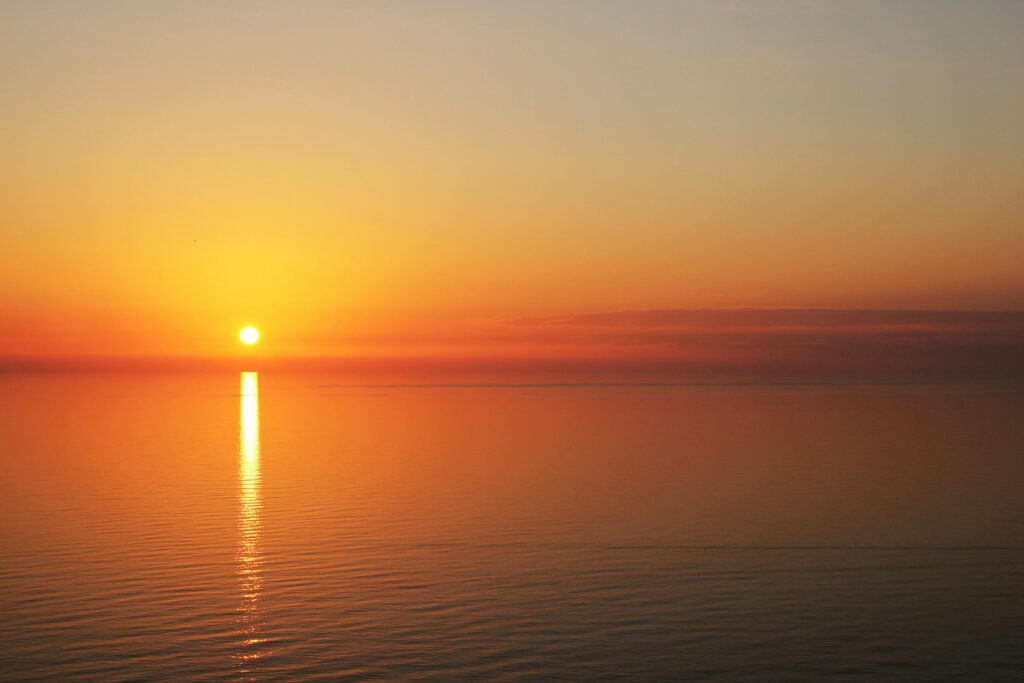
Watching this natural light show has an almost mystical feel; many say you can sense a special energy as the sun meets the horizon.
Formentera also offers sunset magic, especially at Cala Saona where cliffs frame a westward view – the water and sky turn to liquid gold, and every object is silhouetted in the amber light. Dusk on Formentera’s Cap de Barbaria (home to a lone lighthouse) is tranquil and inspiring, with 360-degree horizons glowing in pastel hues.
When night falls, a different kind of light inspires. Formentera, with no big towns and minimal light pollution, reveals a brilliant starry sky on clear nights. Countless stars spread across a navy canvas, twinkling bright because there are no city lights to drown them out. It’s the kind of night sky that urban dwellers rarely see – the Milky Way is often visible, and stargazing on a warm summer night here can be unforgettable.
Ibiza Town has more illumination in the evenings (and of course, colorful nightlife neon in certain areas), but even so, the island nights retain a touch of wonder. From the gentle beam of a lighthouse sweeping over the dark sea to the soft glow of beach restaurants at night, light in Ibiza and Formentera continually sets the mood. In short, the interplay of light and darkness – intense sun, glorious sunset, and starry night – is a key part of the islands’ visual charm.
Textures and Details
Beyond the bold colors and glow, Ibiza and Formentera invite you to appreciate their many textures and details – the small things that give the islands character. In the countryside of Formentera, you’ll find dry stone walls zig-zagging between fields, their sunbaked rocks stacked without mortar in the old way. These low, craggy walls divide the landscape into a patchwork and tell of the island’s farming heritage. Scattered around are ancient fig trees with wide, gnarled branches that locals prop up with wooden stakes to create much-needed shade – a rustic tableau that is both practical and visually striking.
Walk a dusty path and you might pass a cluster of fishermen’s huts in a cove, their weathered wood blending into the rocks. Such huts, built right at the water’s edge to shelter small fishing boats, speak to simpler times and add a human texture to wild beaches. Formentera’s very shape, with its jagged coastline of cliffs and coves, ensures a mix of textures: you can stand on a rough limestone bluff at Cap de Barbaria and look down to silky sand beaches below. On the shoreline, the sand itself is fine and powdery in places like Migjorn or Ses Illetes, but in other spots you’ll find coarse grains mixed with shells and pebbles.
This variety means your senses are always engaged – the islands are as tactile as they are visual.
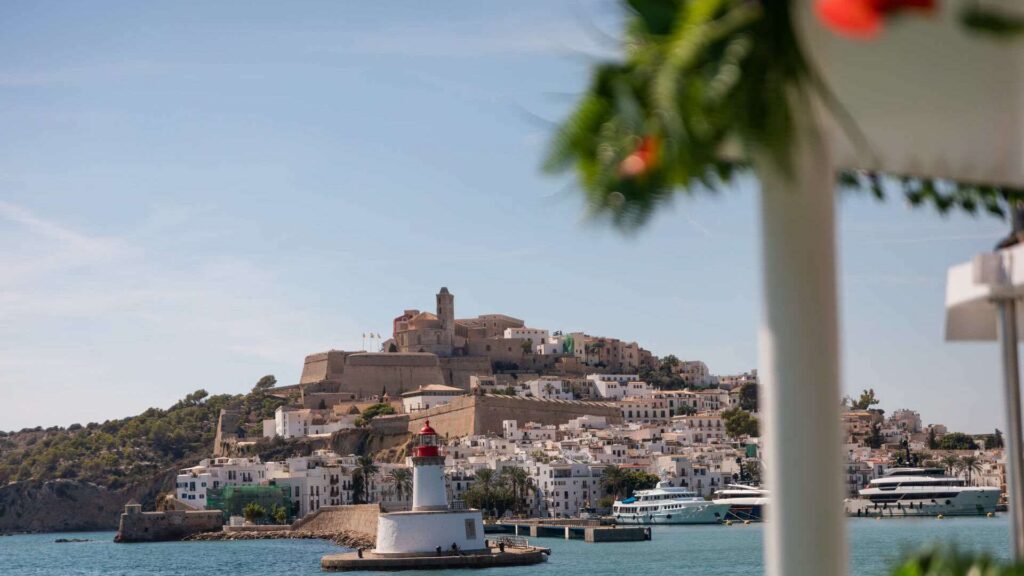
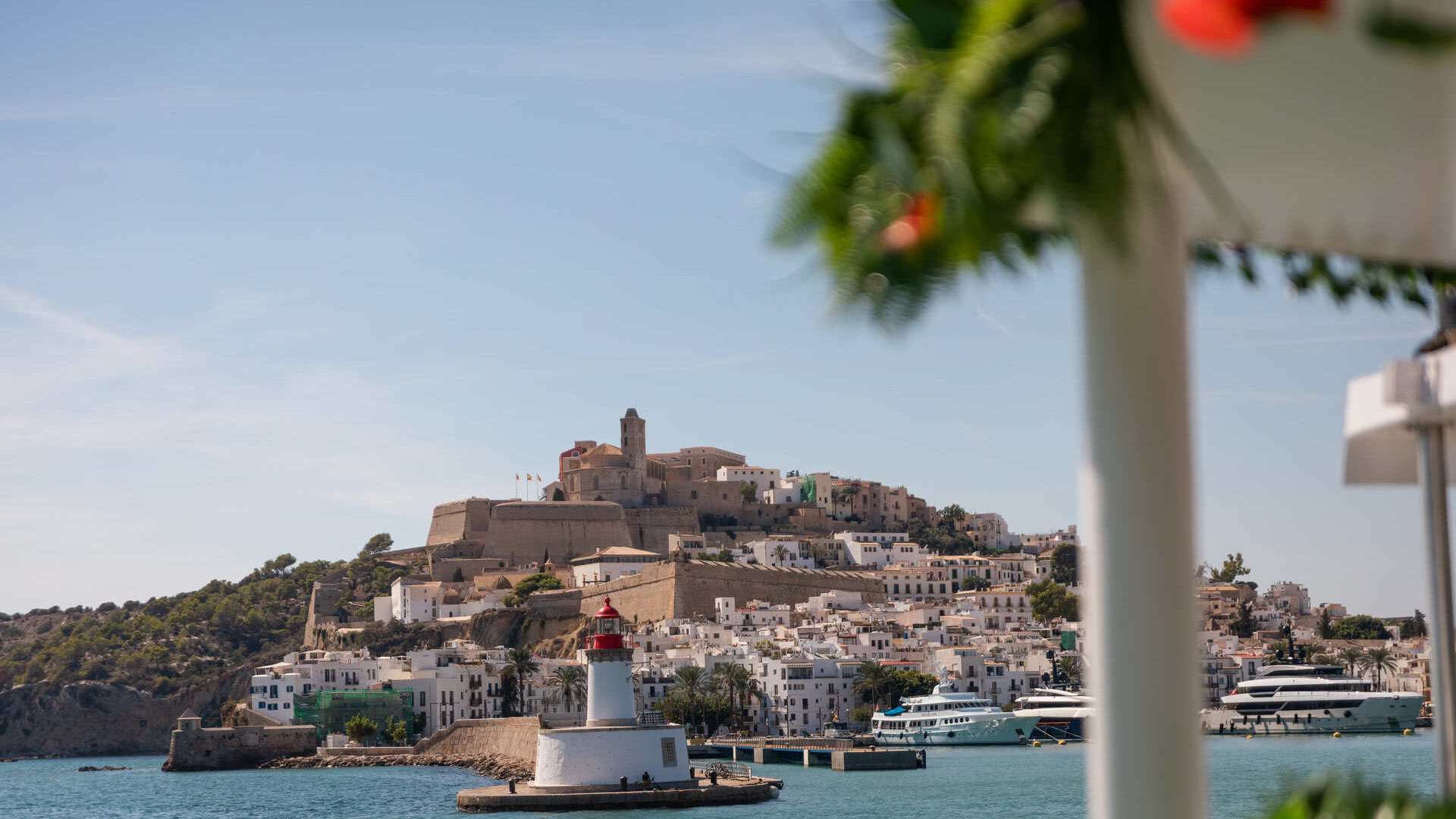
Meanwhile, Ibiza’s towns and villages offer architectural textures that delight the eye. In the UNESCO-listed old town of Ibiza City, Dalt Vila, history is literally under your feet on the cobblestone streets. The streets form a labyrinth of uneven cobbles and stones worn smooth by centuries – strolling here is like stepping back in time. The thick fortress walls of Dalt Vila, made of stone and limestone mortar, add a rough, ancient backdrop to the town’s labyrinthine lanes. Many buildings are whitewashed in the traditional style, giving a chalky matte finish that practically glows in sunlight and then cracks and peels charmingly with age.
Wooden shutters painted in blues or greens provide pops of color and a pleasing contrast in texture against white stucco walls. In the countryside of Ibiza, you’ll encounter classic fincas – square-shaped farmhouses with chunky stone walls coated in white plaster and sabina wood beam ceilings.
These structures have a sturdy, hand-crafted texture; you can often see the slight undulations where plaster was applied by hand ages ago. Even natural elements contribute to the textural landscape – consider the spiky outlines of pine and juniper trees on dry hillsides, or the shimmer of salt crystals at Ibiza’s Las Salinas salt flats. In sum, every surface has a story: from rough rock to smooth sand, from rustic wood to sun-bleached paint. Paying attention to these details enriches your experience of Ibiza and Formentera, helping you appreciate their depth beyond the postcard views.
Sailing Between Ibiza and Formentera
Of course, to fully appreciate the visual splendor of these islands, it helps to experience them together – and the journey between Ibiza and Formentera is a treat in itself. With Formentera lacking an airport, the only way to arrive is by sea, making a Formentera Ibiza day trip easy and popular for summer visitors. As you cruise away from Ibiza’s port, you get a stunning view of Dalt Vila’s white silhouette and the hills beyond, gradually receding. Approaching Formentera, the water below turns crystalline aquamarine, and you can spot the outline of Posidonia seagrass meadows beneath the surface – a hint of the pristine beaches waiting for you.
For those seeking a more leisurely or festive voyage, a Formentera catamaran tour is an unforgettable option. These tours let you sail in style aboard a spacious catamaran, often with friendly crew and likeminded travelers on board.

Many such excursions turn into a mini celebration at sea: a lively atmosphere with music, good food, and chilled drinks creates a joyful vibe as you glide over the waves.
It’s essentially a floating beach club, but in the middle of the Mediterranean! Without endorsing any particular company, it’s safe to say that sailing between the islands can be a highlight of the trip.
You might anchor off Espalmador (a tiny uninhabited islet) for a swim in water so clear it feels like a pool, or pause near Cala Saona to snorkel around colorful fish. With the sun on your face and the Ibiza skyline in the distance, you gain a new appreciation for the islands’ geography and beauty. By the time the boat returns, often timed with a sunset view, you’ll have a camera full of stunning images and a head full of wonderful memories – all without ever stepping into an airport or a tour bus.
Conclusion
In a neutral and informative sense, Ibiza and Formentera offer far more than nightlife or beaches – they are a feast for the eyes and a wellspring of inspiration. From the vivid colors of turquoise seas and bougainvillea blooms, to the unique light that dances on horizons and ignites sunsets, to the rich textures of cobbled streets and sandy coves, every aspect of these islands tells a visual story.
Whether you’re a photographer chasing perfect light or a traveler craving beauty, the scenery of Ibiza and Formentera delivers in spades. And if you’re lucky enough to hop between them – perhaps on a friendly catamaran with music playing and waves sparkling – you’ll see how these two islands, each with its own style, together create a Mediterranean tableau of color, light, and texture that leaves a lasting imprint on your soul.